The Five Minute Face for the First Genuinely Cold Morning
Quick Answer: Cold skin changes makeup behaviour in three specific ways: product viscosity increases so everything drags rather than blends, skin texture tightens and flakes show more, and the flush pattern changes as blood vessels constrict outdoors and dilate when you come inside. The five-minute fix is mostly about order and temperature: warm the product, not the skin, switch from powder to cream, and do the eyes before the base so the base has a few minutes to settle before you go out into the cold.
The routine takes five minutes all summer. Then one morning in September the bathroom is cold, the foundation drags across your cheek in streaks, and something that was smooth yesterday now sits in every dry patch.
Your skin did not change overnight. The temperature did, and almost every product in your bag has a viscosity that depends on it.
The adjustment is small, and it is mostly about order.

What actually changes when it gets cold?
Three things, and they are all physical rather than about your skin type.
Product viscosity rises. Cream and liquid formulas are emulsions, and their thickness is temperature-dependent. A foundation that spreads easily at 22°C is measurably thicker at 15°C. Thicker product means more drag, less even coverage, and visible streaking - which is exactly what people notice first.
This is not the product going bad. Warm it in your hands for a few seconds and it behaves normally again.
Skin surface changes. Cold, dry air pulls moisture from the outer skin layer, and indoor heating dries it further. A dehydrated surface has more texture, and every product that sits on the surface - powder especially - highlights texture rather than hiding it.
The heating coming on is genuinely a bigger factor than the outdoor temperature for most people, and it usually starts within days of the first cold morning.
Circulation patterns change. In cold air, blood vessels near the skin surface constrict, which reduces natural colour. Come inside into warmth and they dilate, often more than before, producing a flush across the cheeks and nose.
This is why blush placed at 7am can look wrong at 9am. You applied it to constricted skin and are now looking at dilated skin with the blush on top. It is also why some people need less blush in cold weather rather than more.
And a fourth: everything takes longer to set. Setting and drying depend on evaporation, and evaporation slows in the cold. A base that was touch-dry in thirty seconds in August takes considerably longer now, which matters if you are putting a scarf on straight after.
What is the reordered five minutes?
Eyes first, base second, cream products throughout.
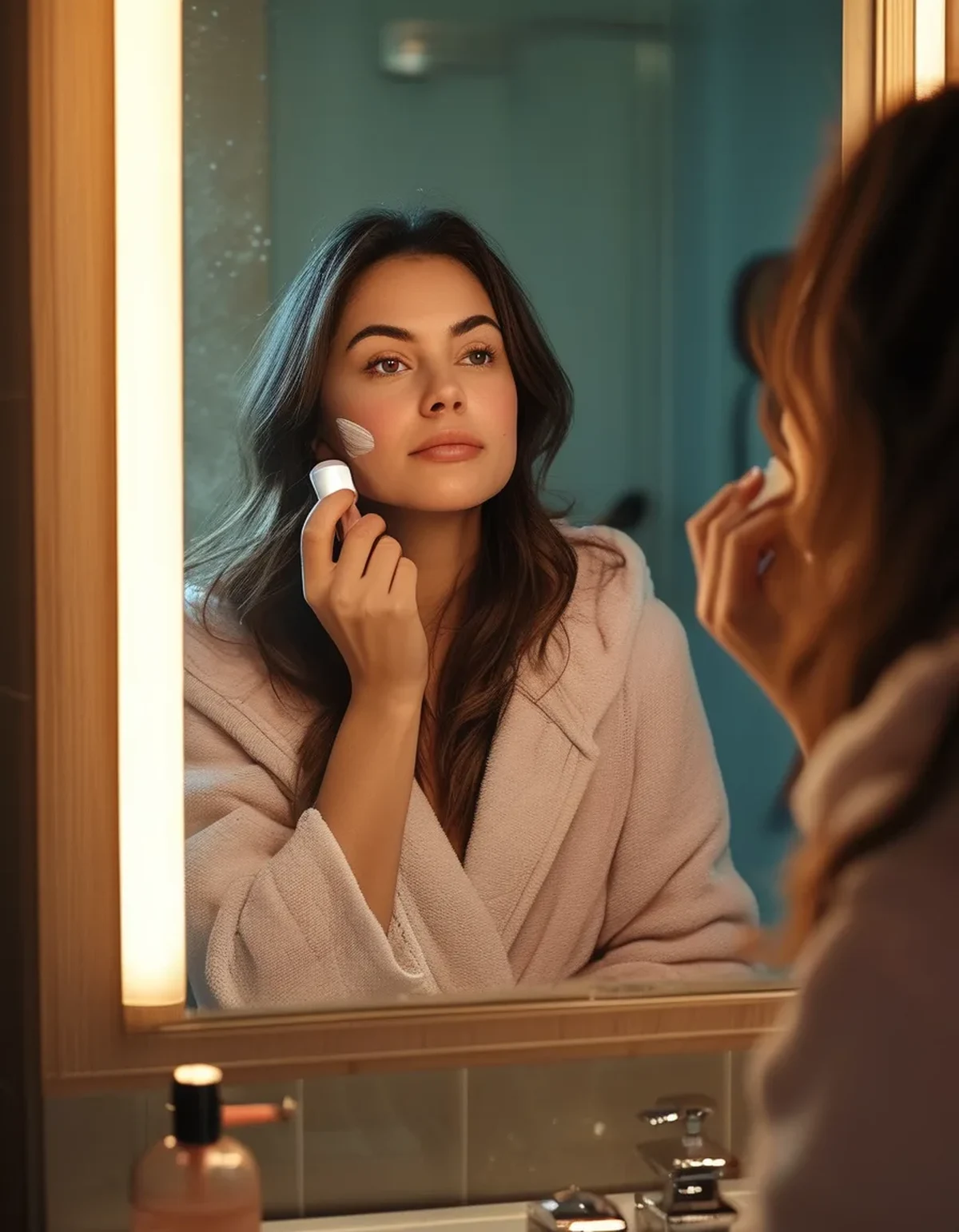
Minute 1: Prep, and warm the products. Moisturiser on slightly damp skin - this matters more now than at any other time of year, because it traps the water rather than adding it to dry skin. While that absorbs, hold your foundation tube in your hand or press it between your palms for twenty seconds. This single step solves most of the drag problem.
Minute 2: Eyes. Doing eyes first is the change that makes the biggest practical difference in cold weather. It gives your moisturiser a full minute or two to absorb properly before the base goes on, which is the main cause of patchy application on cold, tight skin. It also means any fallout is dealt with before the base rather than after.
Keep it simple - a cream shadow blended with a finger, and mascara.
Minute 3: Base, warmed and applied thinly. Less product than you think, pressed rather than swept. Pressing works better than sweeping on cold skin because sweeping drags a thick product across a textured surface, which is what causes streaking. A damp sponge helps considerably.
Minute 4: Cream blush and cream bronzer, applied before any powder. Cream over cream blends; powder over cream does not. Place blush slightly higher and lighter than you would in summer, allowing for the flush that arrives when you get indoors.
Minute 5: Minimal powder, lips, and a check. Powder only where you genuinely need it - typically the centre of the face - because powder on dry autumn skin emphasises texture everywhere else. Then a lip product with some slip rather than a drying matte.
And leave two minutes before going outside if you can. Products set more slowly in the cold, and putting a scarf on over an unset base transfers half of it to the scarf.
What Nobody Tells You About Cold Weather Makeup
Warm the product, not your face. Warming your skin - a hot shower, a hot flannel - temporarily dilates blood vessels and plumps the surface, so you apply to a version of your face that does not persist. Warming the product achieves what you actually wanted without changing the canvas.
Powder is the first thing to reduce, not the last. People instinctively add powder when a base looks patchy, and on cold dry skin that makes it worse. The patchiness is texture, and powder settles into texture. Reducing powder and adding a light cream product almost always improves it.
Cream blush moves as your face warms up. The flush that arrives when you come indoors sits under whatever you applied, which usually means less product is needed than in summer. Placing it slightly higher on the cheekbone gives you somewhere for the natural flush to go.
Lip products fail first and most visibly. Cold air and wind strip lips fast, and a matte formula on a dry lip is the most common autumn makeup complaint. A balm underneath, or a formula with more slip, solves it. Applying colour over already-flaking lips will always look worse than a bare lip with balm.
Your foundation shade will need to change, and it takes a few weeks. Skin lightens as summer colour fades, usually over three to six weeks. A shade that is very slightly too dark reads immediately as a mismatched jawline in flat autumn light, which is less forgiving than summer sun.
And humidity is about to reverse. Summer’s problem was product sliding off in humidity. Autumn’s problem is the opposite - product clinging to dry patches. The products that performed best in August, the long-wear matte ones, are often the worst performers now, and that switch catches people out because nothing about the product changed.
What should actually change in the bag?
Four swaps, and none of them require a whole new routine.
Swap powder blush for cream. The single highest-value change. Cream blush sits on dry skin without emphasising texture, blends into a warmed base, and looks more like actual flushed skin - which is what your face is doing anyway in this weather.
Swap a long-wear matte base for something with more moisture. Matte formulas are designed to control oil, and there is less oil to control now. A skin tint, a hydrating foundation, or your existing foundation mixed with a drop of moisturiser will all sit better.
Add a hydrating layer under everything. A hydrating serum or an essence on damp skin before moisturiser. This is doing more work than any makeup change, because most cold-weather application problems are dehydration problems.
Swap a matte lip for a balm-based one. Or keep the matte and put balm under it. Lips are the first thing to go and the most visible.
And keep one thing in a pocket: a small balm. Cold wind, indoor heating, and a scarf rubbing all work on the lips through the day, and a balm at lunchtime prevents the afternoon situation that no amount of morning preparation solves.
On brushes and sponges: a damp sponge outperforms a brush on cold skin for base application, because the moisture helps the thicker product move. Rinse it in warm water and squeeze it out - a cold damp sponge makes the drag problem worse rather than better.
FAQ: Cold Morning Makeup Questions, Answered
Why does my foundation look streaky now when it did not in summer?
Two reasons stacking. The product itself is thicker at lower temperatures, so it drags rather than spreading. And your skin surface has more texture from cold, dry air and indoor heating, so a thicker product catches on it. Warming the product in your hands for twenty seconds and pressing rather than sweeping it on addresses both.
Should I change my foundation shade already?
Probably within the next few weeks, and it is worth checking rather than assuming. Summer colour fades over roughly three to six weeks, and autumn light is flatter and less forgiving of a jawline mismatch than summer sun is. Mixing your summer shade with a lighter one, or with a drop of moisturiser, bridges the gap without buying a new bottle.
How do I stop my makeup transferring onto a scarf?
Leave two minutes between finishing your base and putting the scarf on - products set more slowly in the cold because evaporation slows. Applying less product also helps considerably, since transfer is mostly excess. If it is a persistent problem, a light dusting of powder along the jaw and chin only, rather than all over, targets exactly the contact zone.
TL;DR:
- Cold changes three things: product viscosity rises (drag and streaks), skin texture increases (powder emphasises it), and the flush pattern shifts when you move between cold and warm.
- Warm the product in your hands, not your face. Twenty seconds fixes most of the drag.
- Reorder to eyes first, base second - it gives moisturiser time to absorb and prevents patchy application.
- Press, do not sweep, with a warm damp sponge. Reduce powder rather than adding it.
- Swap to cream blush, a hydrating base, and a balm-based lip. The long-wear mattes that won in August are the worst performers now.
Leave two minutes before the scarf goes on. Products set more slowly in the cold, and the scarf takes the difference.
Keep Reading
This article is for general informational and styling purposes only. Fit, sizing, and product availability may vary.