The 5-Minute Face That Works for Combination Skin (Oily T-Zone, Dry Cheeks)
Quick Answer: For combination skin, use a lightweight, oil-free base only on the T-zone and a more hydrating formula on the cheeks, set with powder only where shine actually shows up. Treating your whole face the same way is the main reason a 5-minute routine fails on combination skin by midday.
Your cheeks feel tight and flaky by 9am while your forehead is already shining — the classic combination skin contradiction that most quick makeup routines aren’t built to handle, because most routines assume one skin type for the whole face.
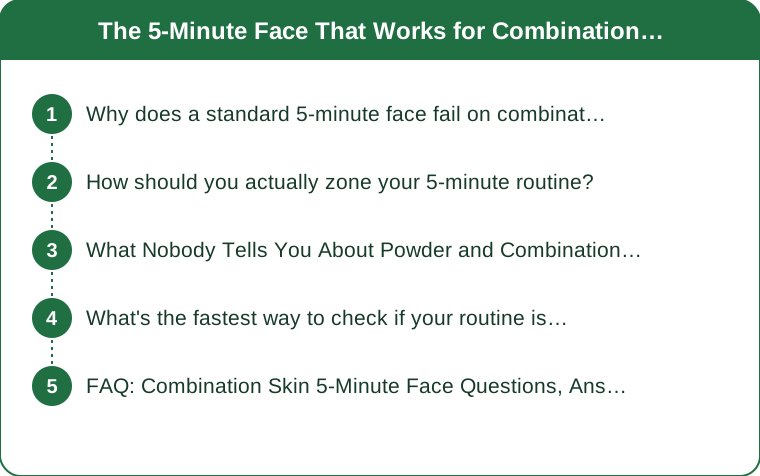
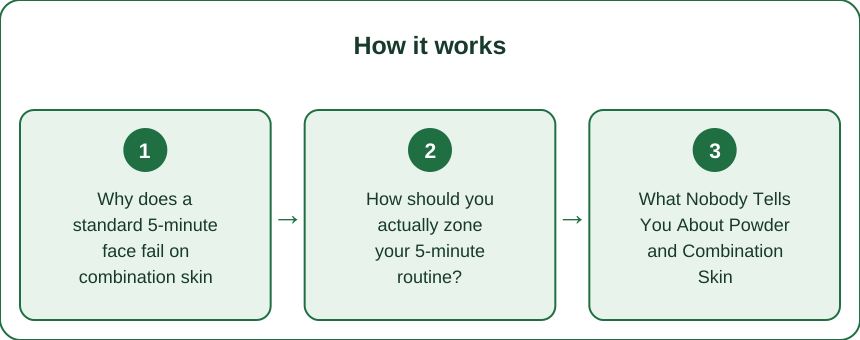
Why does a standard 5-minute face fail on combination skin specifically?
Most quick routines apply one product uniformly across the whole face, which means a mattifying, oil-control formula that’s perfect for your T-zone ends up over-drying and emphasizing flakiness on your cheeks, while a hydrating formula that suits your cheeks melts and slides on your T-zone by lunch.
How should you actually zone your 5-minute routine?
Split your face into two zones and treat each honestly: a lightweight, oil-free tinted moisturizer or powder foundation on the forehead, nose, and chin, and a slightly more hydrating cream formula on the cheeks. This takes zero extra time if you’re already using your hands or a small brush — it’s a placement change, not an extra product.

What Nobody Tells You About Powder and Combination Skin
The instinct is to skip powder on dry cheeks entirely — reasonable, but incomplete. Setting powder used only on the T-zone, pressed on lightly rather than swept everywhere, controls shine exactly where it happens without touching the drier areas at all. Full-face powder is the actual mistake, not powder itself.
What’s the fastest way to check if your routine is actually working?
Blot your forehead with a tissue around midday. If it comes back visibly oily but your cheek makeup still looks intact, your zoning is working as intended — that’s expected combination skin behavior, not routine failure. The goal is balance, not zero shine anywhere on the face.
FAQ: Combination Skin 5-Minute Face Questions, Answered
Can I use the same primer on my whole combination-skin face?
A pore-blurring, oil-control primer on the T-zone and a hydrating primer on the cheeks works better than one primer everywhere, though a single lightweight, non-drying primer across the whole face is a reasonable one-product compromise.
How often should combination skin touch up during the day?
Usually just once around midday, blotting the T-zone rather than reapplying full coverage — over-touching-up cheeks that are already fine just adds unnecessary product.
Does combination skin change with the seasons?
Yes, noticeably — the T-zone often gets oilier in humidity and the cheeks drier in cold, dry air, so your product ratio between the two zones is worth adjusting seasonally rather than treating it as fixed year-round.
TL;DR:
- Combination skin needs two product strategies in one routine, not one product used everywhere
- Lightweight, oil-free formula on the T-zone; more hydrating formula on the cheeks
- Use setting powder only where shine actually shows up, not across the whole face
- A midday blot test tells you if your zoning is actually working
Once you stop treating your whole face the same way, a 5-minute routine holds up far better through a full day.
Keep Reading
This article is for general informational and styling purposes only. Fit, sizing, and product availability may vary.