The Five-Minute Face for Mornings That Just Lost Ninety Minutes
Quick Answer: A five-minute face works when it is built around three decisions made the night before: which two products do the most work, where they live, and what gets skipped entirely. The order that survives a compressed morning is skin, eyes, then colour - and the highest-value change is doing skincare the night before so the morning starts at step three.
The routine fails not because five minutes is too short, but because deciding what to use takes longer than applying it.

Why does a routine that fitted in July fail in September?
Because time did not shrink evenly - the decision-making did not shrink at all.
Where the time actually goes. In a slow morning, choosing products, adjusting, and stepping back to look are free. In a compressed morning they are most of the routine, and they are the parts that do not compress.
The measurable breakdown of a typical rushed morning:
- Deciding and locating products: 2 to 4 minutes, and this is the part that expands under stress
- Actual application: 3 to 5 minutes
- Correcting mistakes made while rushing: 1 to 3 minutes
Which means the fix is not faster hands. It is removing decisions and removing correction, both of which are done the night before.
The other seasonal factor. Skin behaves differently in the transition - often still oily from summer, starting to feel tight from lower humidity, and reacting to a lighting change as mornings get darker. A summer routine built for shine control frequently looks dry and patchy in September on skin that has started to change.
The lighting change specifically. Applying makeup at 6:30am in artificial light in September is not the same as applying it at 8am in daylight in July. Artificial light under-reads coverage, so people apply more than they intend and only see it outside. A daylight bulb or a mirror near a window is a genuine fix for a problem people usually blame on the products.
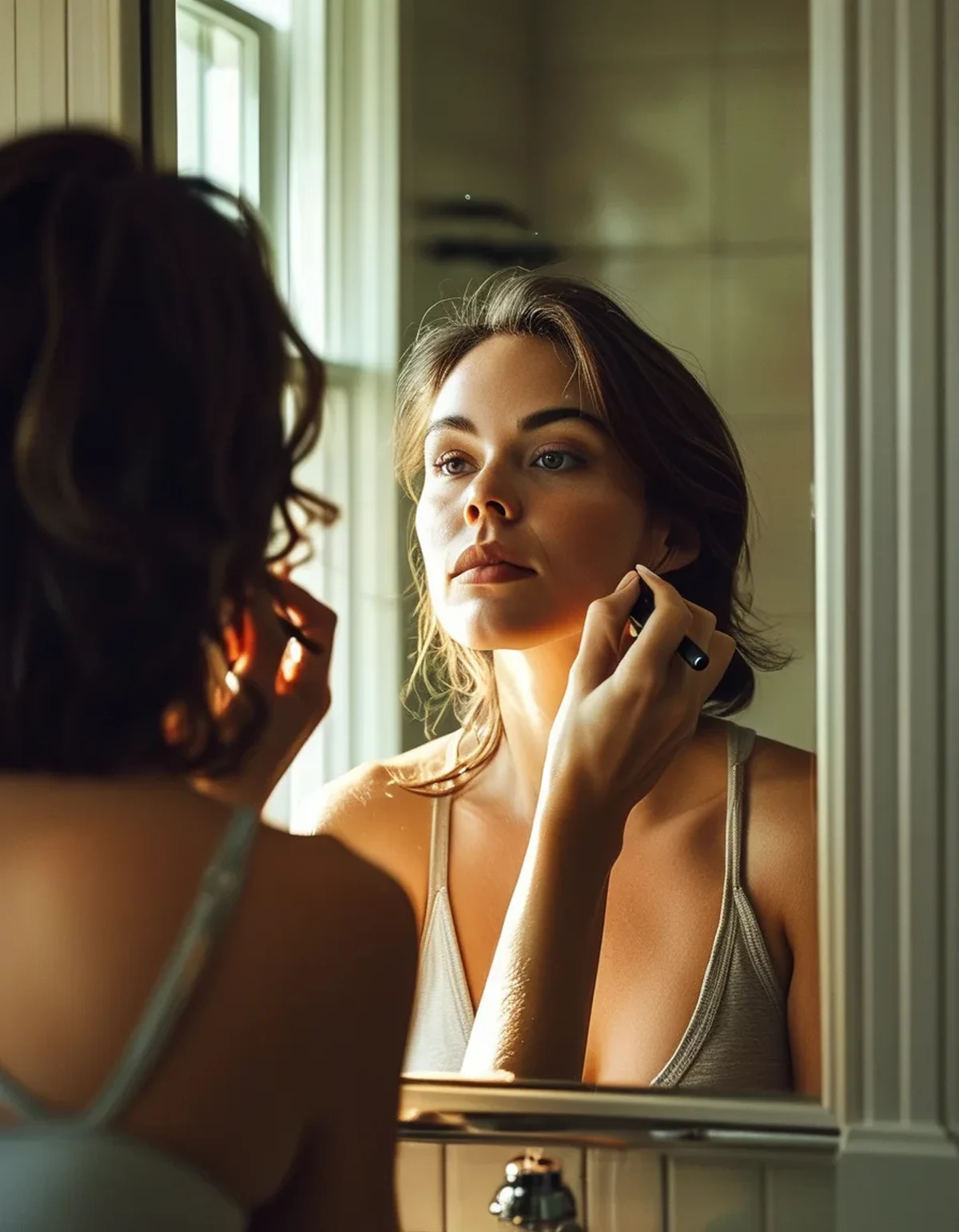
What is the actual five-minute sequence?
Three phases, timed, with an explicit skip list.
Phase 1 - Skin, 90 seconds:
- Moisturiser with SPF, applied to a still-slightly-damp face, which spreads faster and absorbs better. One product doing two jobs saves 40 seconds
- Tinted moisturiser, skin tint or a light base, applied with fingers. Fingers are faster than any tool and warmth helps it blend
- Concealer on two places only - under the eyes and anywhere actively red. Not full coverage. Tap, do not rub
Phase 2 - Structure, 2 minutes:
- Brows, 45 seconds. The single highest-impact item on a tired face. A tinted gel is faster than a pencil and more forgiving
- Cream blush, 30 seconds, applied with fingers to the cheeks and blended up. Cream over powder for speed - no brush, no fallout, and it looks better on skin that is starting to feel dry
- Curl lashes and one coat of mascara, 45 seconds. Curling makes more difference than a second coat, and takes less time
Phase 3 - Finish, 60 seconds:
- A tinted balm or lip colour, applied without a mirror if needed
- A quick look in daylight if at all possible, which catches the one thing artificial light hid
The explicit skip list, which is what makes it fit:
- Powder, unless you are genuinely oily - and even then, on the T-zone only
- Contour and highlight, which need time and good light
- Eyeshadow, which is the biggest time cost for the smallest return on a rushed morning
- Lip liner
- Setting spray, unless the day is long
The rule that holds it together. Cream and stick formats throughout. They apply with fingers, need no tools, blend forgivingly, and do not require washing anything afterwards.
What should you do the night before?
Three things, taking four minutes, which is where the morning time actually comes from.
1. Do the skincare at night, properly.
- Cleanse, treat, moisturise. Anything active - retinoids, acids - belongs at night anyway
- This means the morning is a rinse and a moisturiser with SPF, which is 60 seconds rather than four minutes
- A richer night moisturiser also addresses the dryness that starts as humidity drops
2. Lay out exactly the products you will use.
- Not the drawer. The five items, on the counter, in order. This is the single biggest time saving available and it feels excessive until you do it
- A small tray or pouch keeps them together and makes it a ten-second job
- Decisions made the night before are made calmly, which is why the result is also better
3. Decide the one thing that matters tomorrow.
- If it is a normal day, it is brows. If there is a meeting, it might be base. Knowing the priority means the routine degrades gracefully when the morning goes wrong
- A five-minute face that gets four minutes should lose the least important thing, not the last thing
The overnight preparation that pays off most. Hair, if it is a variable. A morning that includes a hair decision is not a five-minute morning, and most of the ways to remove that decision happen the night before.
On skin during the transition, which changes what you prepare:
- If skin is tightening, move to a richer night moisturiser now rather than in October
- If it is still oily, keep the lighter one and add hydration rather than heaviness
- Both can be true in different areas, which is normal in this season and is what makes September skin confusing
What Nobody Tells You About Fast Makeup Routines
Fewer products almost always look better in low morning light. A rushed application of many products reads as makeup; a careful application of four reads as skin. The constraint improves the result more often than it degrades it, which people discover by accident.
Cream formulas are more forgiving than powder when you are rushing. They blend with body heat, they do not create hard edges, and mistakes disappear with a finger. Powder blush applied quickly is very unforgiving, and it is the most common cause of a rushed face looking rushed.
Artificial morning light is why you look different at work. Warm bathroom bulbs make you under-apply base and over-apply blush. A daylight-balanced bulb costs very little and fixes a problem people spend money on products to solve.
Brows are worth more than base on a tired morning. If there are 90 seconds, spend them on brows. Structure reads as awake in a way that coverage does not, and it holds all day without touch-up.
The five-minute face is a different routine, not a compressed one. People try to do their normal routine faster, which produces a worse version of it. Choosing four products deliberately produces a good version of something else - and that distinction is why some people manage it easily and others never do.
Your September skin is not your August skin. Falling humidity, a schedule change and disrupted sleep all show up on the face within a fortnight. A base that sat perfectly in July can look patchy on the same skin in September - it is the skin that changed, not the product going off.
FAQ: Five-Minute Makeup, Answered
What are the five products worth keeping?
A moisturiser with SPF, a light base or tinted moisturiser, concealer, a brow product, and a cream blush. Mascara replaces one of them on days you have the extra 45 seconds.
What should I do the night before?
Full skincare, and lay the exact products out on the counter in order. Product selection is where rushed mornings lose the most time, and it is entirely removable.
What is the highest-impact single item?
Brows. Structure reads as awake more than coverage does, it takes 45 seconds with a tinted gel, and it does not need touching up.
Why does my makeup look different at work than at home?
Warm bathroom lighting under-reads base and over-reads blush. A daylight-balanced bulb, or applying near a window, fixes it more effectively than changing products.
Why has my usual base stopped sitting well?
Falling humidity and a schedule change alter skin within a fortnight. Add hydration underneath before changing the base itself - it is usually the skin, not the product.
What should I drop first when I have less time?
Eyeshadow, then powder, then blush. Keep brows and base. Decide the priority the night before so the routine degrades gracefully rather than randomly.
TL;DR:
- Rushed mornings lose time to deciding, not applying - lay the exact products out the night before
- Move all skincare to the evening so the morning starts at moisturiser with SPF
- Cream and stick formats throughout: fingers only, no tools, forgiving when rushed
- Brows are the highest-return 45 seconds on a tired face, ahead of base
- Apply in daylight or under a daylight bulb, or you will over-apply blush and under-apply base
A five-minute face is not your normal routine done fast. It is four products chosen deliberately, and it usually looks better.
Keep Reading
This article is for general informational and styling purposes only. Fit, sizing, and product availability may vary.