The Five-Minute Face That Works With Glasses
Quick Answer: Glasses do three things to makeup — lenses shrink or enlarge the eye depending on prescription, frames cast a shadow across the under-eye, and the nose pads plus lens edges destroy product by friction. The fix is redistributing effort: less on the lid, more on the lash line and brows, and a genuinely transfer-resistant base on the nose. Five minutes is plenty once the order is right.
Most quick makeup routines assume nothing is sitting on your face. If you wear glasses all day, three parts of that routine are being actively worked against.
Once you know which three, the routine gets shorter rather than longer.
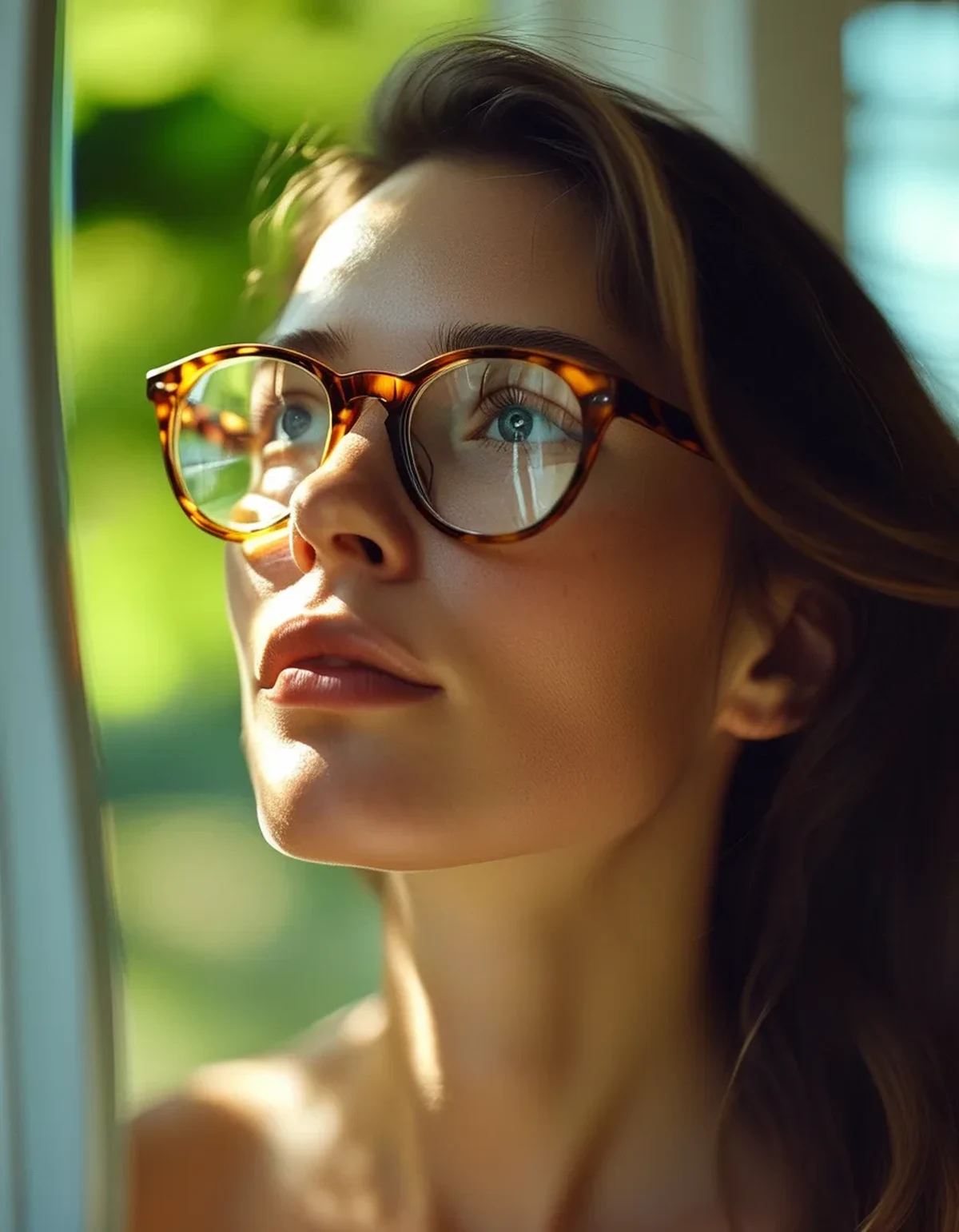
What do lenses actually do to your eyes?
It depends on your prescription, and this is the single most useful thing to know because it flips the advice.
Minus lenses, for short-sightedness, make eyes look smaller. The stronger the prescription, the more pronounced. Subtle eye makeup essentially disappears behind them.
The adjustment: define rather than shade. A defined lash line, darker lashes and a slightly stronger brow read through a minus lens where a soft wash of shadow does not. Lining the upper lash line — right into the roots — creates the density that survives the shrinking effect. A light shade on the inner corner and the brow bone reflects light forward and counters some of the reduction.
Plus lenses, for long-sightedness, magnify. Everything is more visible, including texture, unblended edges and any wobble in a liner line. Under-eye concealer that is slightly too heavy is very obvious.
The adjustment: lighter hand, better blending, thinner liner. What looks well-defined in the mirror without glasses looks heavy through the lens. Sheer formulas outperform dense ones.
Both cases share one thing: the eye area is being viewed through a piece of glass that also reflects light. Anything with visible shimmer or glitter catches lens reflections and looks messy rather than luminous. Satin and matte finishes photograph and read much better behind lenses.
The frame itself matters too. A heavy dark frame competes with dark eye makeup — the eye reads the frame as the line, so a strong liner on top can look like too much. Lighter or rimless frames leave more room for eye definition.
Why does everything slide off the nose?
Because you have created a friction and pressure zone that nothing was designed for.
Nose pads sit on a narrow area with constant downward pressure and repeated micro-movement every time you talk, smile or adjust the frames. Any product there is being buffed off continuously. Add the oil that naturally accumulates in that zone and the result is the familiar two bare patches by lunchtime.
The fix is a sequence, and each step matters:
Primer, but only on the pad contact area. A silicone-based or grip primer creates a surface product can hold to. This does not need to go anywhere else on your face.
Less product, not more. The instinct is to build coverage over the patches, which produces something thicker that slides off in one piece. A thin layer adheres far better.
Set it firmly. A light dusting of setting powder pressed — not swept — onto the nose bridge before putting glasses on is the single highest-value step. Pressing embeds it; sweeping removes what you just applied.
Let everything dry properly. Putting glasses on within thirty seconds of applying base guarantees transfer. Sixty to ninety seconds makes a large difference, and it is dead time you can spend on your brows.
A setting spray at the end helps meaningfully, particularly the ones designed for longwear. Let it dry fully before the glasses go on.
The practical accessory fix: silicone nose pads distribute pressure better than hard plastic and are cheap to have swapped at an optician. If your frames leave deep marks as well as bare patches, that is worth ten minutes and a few dollars.
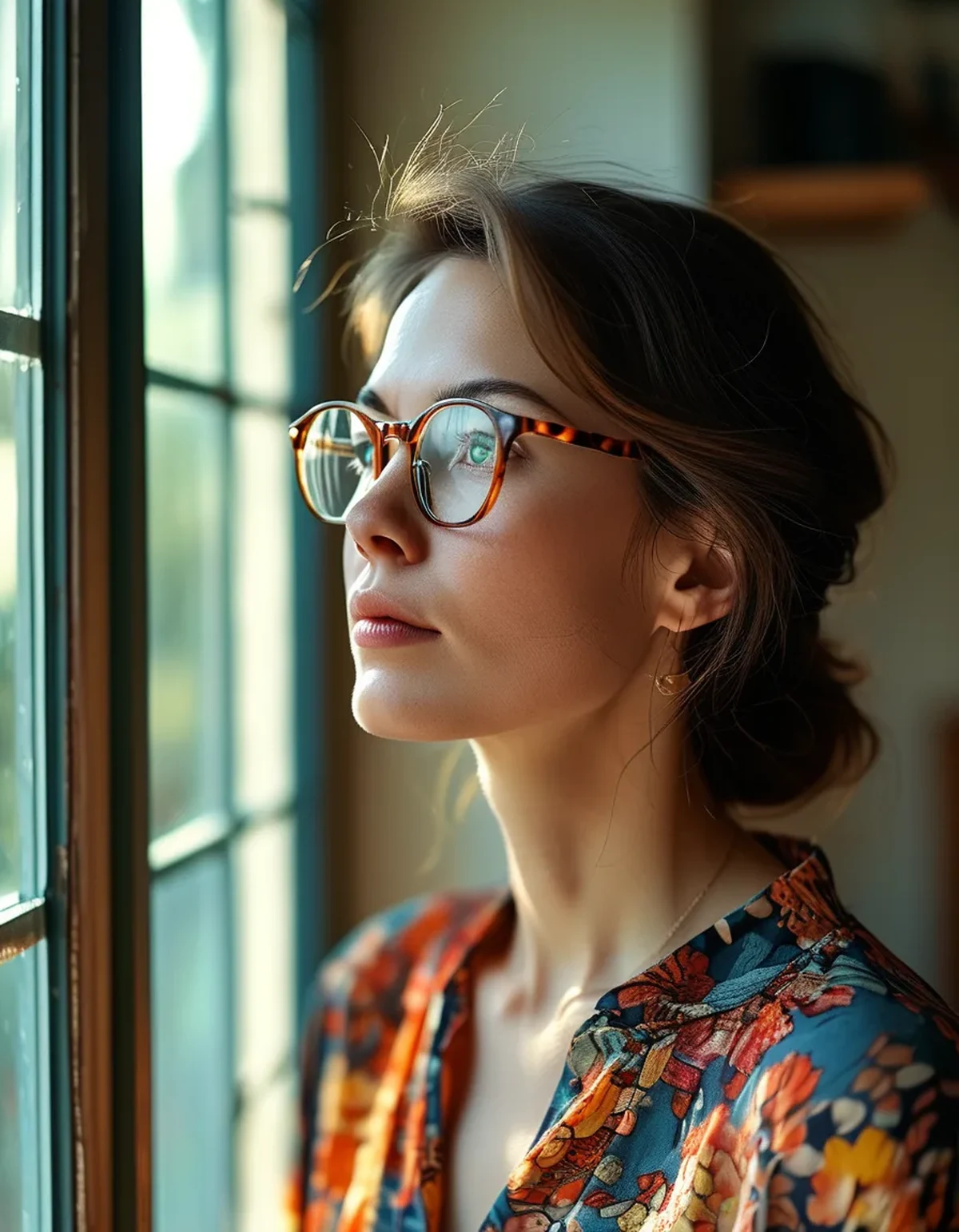
The five-minute order that actually works
Sequence matters more here than product choice, because the constraint is drying time.
Minute 1 — base, thin, with the nose done first. Primer on the nose bridge, then a light base everywhere. Do the nose first so it has the longest time to set before glasses go on.
Minute 2 — under-eye, lighter than you think. Frames cast a shadow across the under-eye area, which makes concealer look heavier and any crease more obvious. Use less than you would without glasses and set it lightly. A brightening shade one step lighter than your base counters the frame shadow better than more coverage does.
Minute 3 — brows, and this is where the time goes. Brows are the most visible feature on a face wearing glasses because they sit above the frame line and are unobstructed. They also need to relate to the frame shape — a strong angular frame with soft undefined brows looks unfinished. This is the one area where spending an extra thirty seconds changes the whole face.
Minute 4 — lash line and lashes. Line into the roots of the upper lashes rather than above them; a thin dense line reads better through a lens than a thick soft one. Curl and mascara on the top lashes only if your lashes touch the lens — this is a real and common problem and the fix is curling upward at the base rather than skipping mascara.
Minute 5 — set the nose, put the glasses on, then do lips and cheeks. Doing colour last with the glasses on lets you judge the balance against the frames, which is how the face will actually be seen. Colour that looked right bare frequently looks under-done once frames are on.
Seasonal note: as the weather cools and you move between cold outdoor air and heated rooms, lenses fog and you will be wiping and adjusting frames far more often. A more transfer-resistant base earns its place from about now through winter.
Myth vs Fact: makeup with glasses
Myth: You should skip eye makeup because nobody can see it. Fact: They can see it, and a bare lid behind a lens frequently reads as tired rather than natural, because the frame shadow darkens the whole eye area. Minimal but defined works; nothing at all often does not.
Myth: Bold frames mean you cannot wear a bold lip. Fact: This is the most repeated rule and it is a preference, not a principle. A strong frame and a strong lip is a deliberate, coherent look. The genuine constraint is competing with the eye — a heavy frame plus heavy eye makeup is where things get muddy.
Myth: Waterproof mascara is the answer for lashes touching lenses. Fact: It stops smudging on the lens, and it does not stop the lashes touching. The actual fixes are a firm curl at the base, a lengthening rather than volumising formula, and — most effectively — frames that sit slightly further from the face. An optician can adjust nose pads to move lenses forward by a few millimetres.
Myth: Concealer needs to be heavier to counter frame shadow. Fact: Heavier concealer sits in creases and is magnified by the lens if you are long-sighted. Brightening — a lighter shade, sheerly applied — counters shadow more effectively than opacity.
Myth: Shimmer opens up the eye behind glasses. Fact: Shimmer catches lens reflections and reads as patchy. A satin finish gives light return without the reflection problem, and it is the better default behind any lens.
FAQ: Glasses and Makeup Questions, Answered
How do I stop marks on my nose?
Silicone nose pads, a properly fitted frame, and setting powder pressed into the bridge. Deep marks usually indicate frames that are too heavy or badly adjusted — an optician can fix this in a few minutes and it is generally free where you bought them.
My lashes hit the lens constantly. What actually helps?
Curl at the base with an eyelash curler, use a lengthening rather than volumising mascara, and ask your optician to increase the vertex distance slightly. That last one is the real fix and almost nobody knows it is available.
Do I need different makeup for reading glasses I only wear sometimes?
Aim for the middle. Makeup that works both with and without frames means slightly more definition than a bare-face routine and slightly less than a full one.
How do I keep lenses clean if I wear makeup?
Apply makeup before putting glasses on, let everything set, and clean lenses with proper lens spray and a microfibre cloth rather than a shirt. Foundation on a lens is genuinely difficult to remove and abrasive rubbing damages coatings.
What about blue light or tinted lenses?
Tinted and coated lenses shift how colour reads. A warm-tinted lens mutes cool tones behind it, so a cool-toned eye look can disappear. Check your look in a mirror with the glasses on, which you should be doing anyway.
Any shortcut if I only have two minutes?
Brows and lash line. Those two, done properly, carry a face wearing glasses further than anything else in the routine.
TL;DR:
- Minus lenses shrink the eye — define the lash line. Plus lenses magnify — lighter hand, better blending.
- Nose pads destroy base by friction: primer on the bridge, thin layers, press powder rather than sweep, wait 60 to 90 seconds.
- Brows carry the face when frames are on. Spend the extra thirty seconds there.
- Do lips and cheeks with the glasses on so you can judge the balance.
- Skip shimmer behind lenses — it catches reflections and reads patchy.
Glasses do not limit what you can wear. They just move where the effort belongs, and the routine gets faster once it is in the right place.
Keep Reading
This article is for general informational and styling purposes only. Fit, sizing, and product availability may vary.