The 5-Minute Face That Survives 90-Degree Humidity
Quick Answer: Humidity beats makeup through the skin underneath it - sweat and oil lift product from below, so the fix is thinner everything, not stronger formulas piled higher. The five-minute order: gel moisturizer only where needed, SPF that dries down fully (the step most routines skip in a rush), skin tint or concealer only where the face actually needs it, cream blush pressed in thin, brows, tubing mascara, powder on the T-zone alone, and a setting spray to knit it together. Waterproof everything is the trap; strategic thin layers are the survival kit.
The routine that worked in April is sliding off by the second coffee now - foundation pooling at the jaw, mascara relocating, blush gone by lunch. The instinct is to apply more and set harder. The instinct is exactly backward, and the correct version is faster than what you are doing.
Why does humidity defeat makeup from below?
Because the battlefield is your skin surface, not the product.
Makeup adheres to a dry-ish, stable surface. Every formula - tint, cream, powder - is engineered to grip clean skin and stay put through minor movement. What it is not engineered for is a surface that keeps producing water and oil underneath it all day.
Humidity attacks twice. First, sweat: on a 90-degree humid day your face perspires almost continuously at a low level, even indoors between air-conditioned stops, and that moisture rises through the makeup film, breaking its grip from beneath - which is why humidity failure looks like sliding and separating rather than fading. Second, oil: heat increases sebum production, and oil is a solvent for much of what makeup is made of. Sweat lifts; oil dissolves; together they undo a base in hours.
Layer count multiplies the failure. Each additional layer - primer, foundation, concealer, cream contour, powder, more powder - adds mass that has to stay adhered through the sweat-and-oil assault. Thick applications do not fail prettier; they fail chunkier, separating into patches and settling into every line. This is the physics behind the season’s only real rule: in humidity, thin wins.
And the touch-up habit accelerates it. Blotting-then-adding powder all day builds a paste of sweat, oil, and pigment that looks worse each round. The survivable version is built once, correctly, then maintained by subtraction - blotting away shine - rather than addition.
The good news buried in all this: humid air is actually flattering to skin - it keeps it dewy and plump, and the glow everyone chases in winter is free right now. The August routine’s job is not to fight that; it is to keep pigment where you put it while letting the humidity do the glow.
What is the actual five-minute routine?
Eight tiny steps, thin by design, in an order that matters.
Minute one - skin prep, subtracted. Skip the rich moisturizer entirely if your skin runs normal-to-oily in summer; humid air is already moisturizing you. A gel or water-cream on any genuinely dry patches only. Then SPF - non-negotiable in August - in a lightweight, fast-drying formula, and here is the trick that saves the whole face: apply it first and let it fully set while you do your hair or drink coffee. SPF that has dried down is a grippy base; SPF still wet under foundation is a slip-and-slide. The routine is five minutes of work, but the SPF gets a head start.
Minute two - base, rationed. Not foundation everywhere: a skin tint or lightweight concealer only where the face actually needs evening - typically around the nose, under eyes, any spots - pressed in with fingers or a damp sponge and blended to nothing at the edges. Fingers are genuinely better than brushes here; warmth melts product thin and presses it into skin rather than laying it on top. Whatever survives at 3pm will look like skin because most of the face is skin.
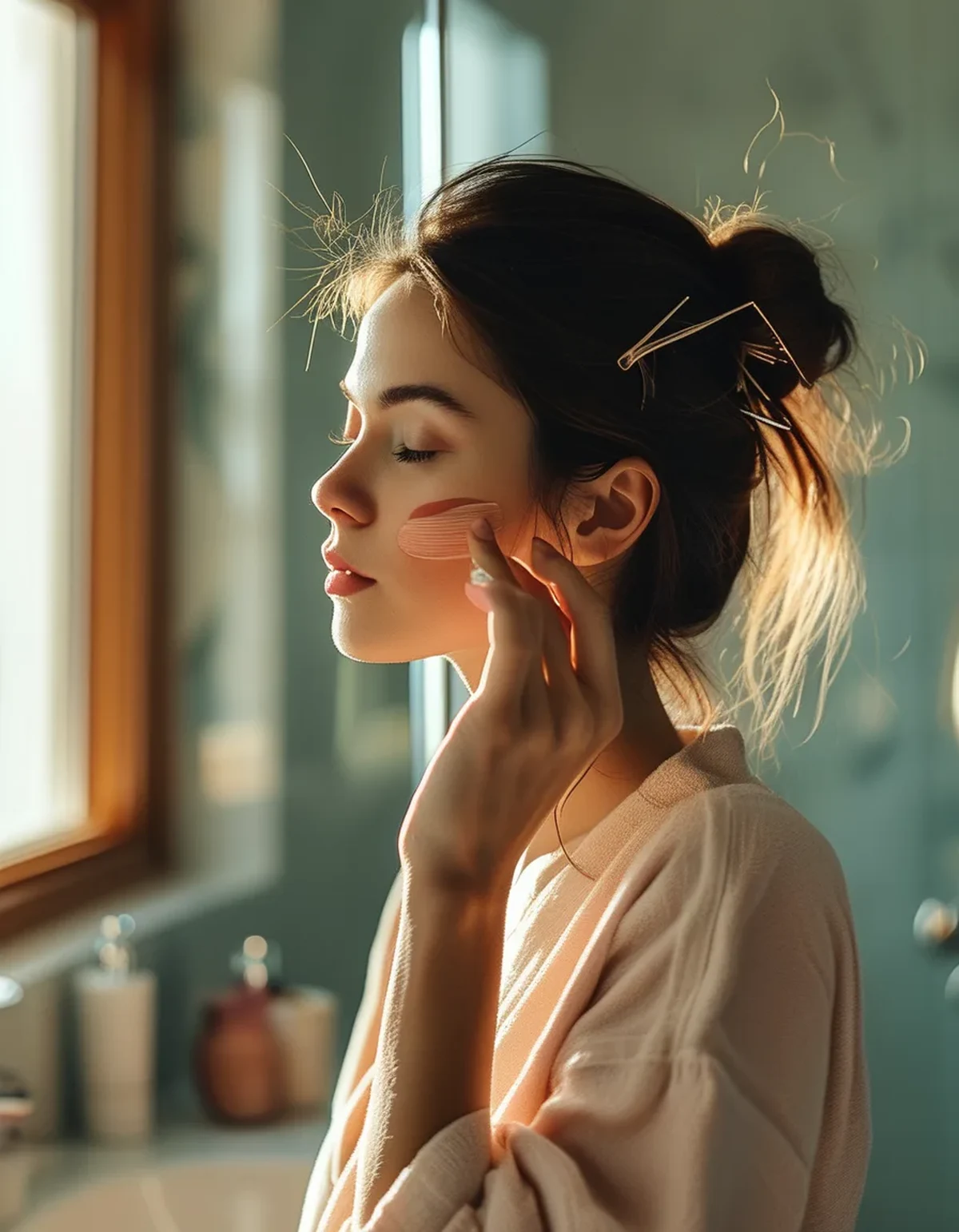
Minute three - cream color, pressed not painted. Cream blush dabbed on the cheeks and pressed in with fingertips, thin enough that the first pass looks like almost nothing - build once more if needed. Cream products flex with sweat where powders sit on top and streak. The same product tapped on lips is the two-for-one the five-minute clock loves.
Minute four - eyes, edited to survivors. Brows first: a brow gel (tinted or clear) is the highest-value thirty seconds on the humid face - brows frame everything and gel holds them through weather. Then tubing mascara - the polymer-tube kind - which cannot smudge into under-eye shadows the way traditional waterproof formulas do, and removes with warm water at night. Skip shadow entirely, or one cream shade in the crease, blended with a finger, done.
Minute five - lock the T-zone only. Pressed powder on forehead, nose, and chin - the oil zones - and nowhere else; powdered cheeks in humidity turn pasty by noon. Finish with setting spray misted from ten inches: it knits the layers into one flexible film. That is the whole face, and it is on the clock at five.
Myth vs Fact: Humidity Makeup
Myth: More powder means more staying power. Fact: Powder absorbs a finite amount, then joins the slide - and each reapplication over sweat builds the cakey paste that looks worse than shine ever did. Powder is a T-zone tool applied once, plus blotting papers (which subtract oil without adding anything) for the rest of the day.
Myth: Waterproof everything is the summer answer. Fact: Waterproof formulas resist water - they do not resist oil, which is half of what is defeating you, and they demand harsh removal that irritates skin into producing more oil tomorrow. Tubing mascara beats waterproof for smudge-proofing on most faces, and flexible thin layers beat armored thick ones everywhere else.
Myth: Primer is skippable in a five-minute routine. Fact: In humidity, the prep layer is the routine - but it does not have to be a dedicated primer product. Fully dried-down SPF does most of the gripping job. If you own a gripping or blurring primer, the T-zone is the only place it earns its thirty seconds. What is actually skippable: the second moisturizer, the all-over foundation, the powder everywhere.
Myth: Touch-ups mean redoing the face. Fact: The all-day maintenance kit is two items: blotting papers and the lip-and-cheek cream. Blot the shine (never rub), tap color back on if needed, done in forty seconds in any bathroom. Adding new base over a worn one is how noon faces become 5pm cautionary tales.
Myth: Humidity is simply the enemy of looking done. Fact: Humidity is the enemy of coverage, and the ally of glow. The seasons trade jobs: winter routines fake dew onto dry skin; August skin brings its own and needs only editing. Working with the weather - minimal base, cream color, real brows - reads more polished in this air than any full-coverage face can.
How do you adapt it to your skin and your day?
Calibrations, because one routine does not fit every face or every Friday.
Oily skin: your enemy is dissolution, so subtract further - skip moisturizer entirely under a hydrating SPF, choose a matte-finish tint, and carry blotting papers like keys. A thin layer of powder can extend to wherever you shine first, but keep cheeks cream-only. Your compensation: oily skin in humidity, thinly made up, photographs like a skincare ad.
Dry skin: you get to keep the gel moisturizer everywhere and skip powder entirely - your face drinks the humidity and looks better for it. Watch only the under-eye, where even dry skin sweats concealer into lines; the thinnest possible layer, pressed in, set with the lightest dust of powder on that half-inch alone.
Long outdoor days: shift the SPF to a sport formula and accept the trade - sport SPFs grip harder and makeup sits on them a little less prettily, which is the right deal for a day at the pool, the game, or the market. Hat and sunglasses become the eye look; brow gel and lip-cheek cream become the whole face. This is also the configuration that survives an August storm sprint to the car.
The big-event humid day: this is the one day the fuller toolkit returns - primer, longwear foundation, real setting powder, the works - because photographs forgive texture more than they forgive shine, and you will be indoors more than out. Just build it in thin passes with a damp sponge, set it once properly, and resist every touch-up except blotting until the event ends.
And the removal note that pays off tomorrow: the humid-season face comes off with gentle cleansing - tubing mascara with warm water, everything else with one pass of a mild cleanser. No stripping removers means calmer skin producing less compensatory oil, which makes tomorrow’s five-minute face start on friendlier ground. The routine, it turns out, is a loop: the less you fight the season at night, the less the season fights you by day.
FAQ: Humidity Makeup Questions, Answered
How do I keep makeup from sliding off in humidity?
Go thinner, not stronger: humidity defeats makeup from below via sweat and oil, so fewer, lighter layers outlast piled-on coverage. The key moves - fully dried-down SPF as your grip layer, skin tint only where needed, cream blush pressed in, powder on the T-zone alone, setting spray to finish, and blotting papers instead of powder reapplications all day.
What is the best mascara for hot humid weather?
Tubing mascara - it wraps lashes in smudge-proof polymer tubes that resist sweat and oil better than traditional waterproof formulas on most faces, and it removes with just warm water. Classic waterproof still wins for swimming or tears, but for the daily commute-and-office humidity fight, tubing formulas are the reliable pick.
Should I skip moisturizer when it is humid?
If your skin is normal-to-oily, usually yes - humid air is doing the hydrating, and a lightweight hydrating SPF covers the rest. Dry skin keeps a gel or water-cream formula. The layer everyone should skip in August is the rich cream that summer sweat immediately lifts, taking your base with it.
How do I touch up makeup on a sweaty day without caking?
Subtract before you add: press a blotting paper wherever there is shine - never rub - and only then decide if anything needs replacing, which is usually just a tap of the lip-and-cheek cream. Adding powder or base over a worn face builds the paste that cakes. Two items in the bag, forty seconds in any mirror.
TL;DR:
- Humidity lifts makeup from below via sweat and oil - so thin layers survive where thick ones slide.
- The order trick: SPF first, fully dried down, as the grip layer for everything after.
- Cream blush and tubing mascara are the two product swaps that matter most; powder is a T-zone-only tool.
- Touch up by subtraction: blotting papers, not more powder. Two-item purse kit.
- Let humidity do the glow - it is the one thing this weather gives for free.
The five-minute face was never about speed for its own sake. In August, less product applied better simply outlasts more - the clock and the weather agree for once.
Keep Reading
This article is for general informational and styling purposes only. Fit, sizing, and product availability may vary.