The Five-Minute Face When the Air Suddenly Turns Dry
Quick Answer: When humidity drops in early autumn, the products that performed all summer start clinging to dry patches and sitting on the surface. The three swaps that fix a five-minute routine are moving from a mattifying base to a hydrating one, replacing powder products with cream ones on cheeks and eyes, and adding one hydrating step under everything. The routine stays five minutes; only the textures change.
Same products, same order, same amount of time. And somewhere in the last ten days it started looking patchy across the cheeks and settling into places it never used to settle. Nothing about your skin changed suddenly. The air did, and the air is half of how makeup behaves.
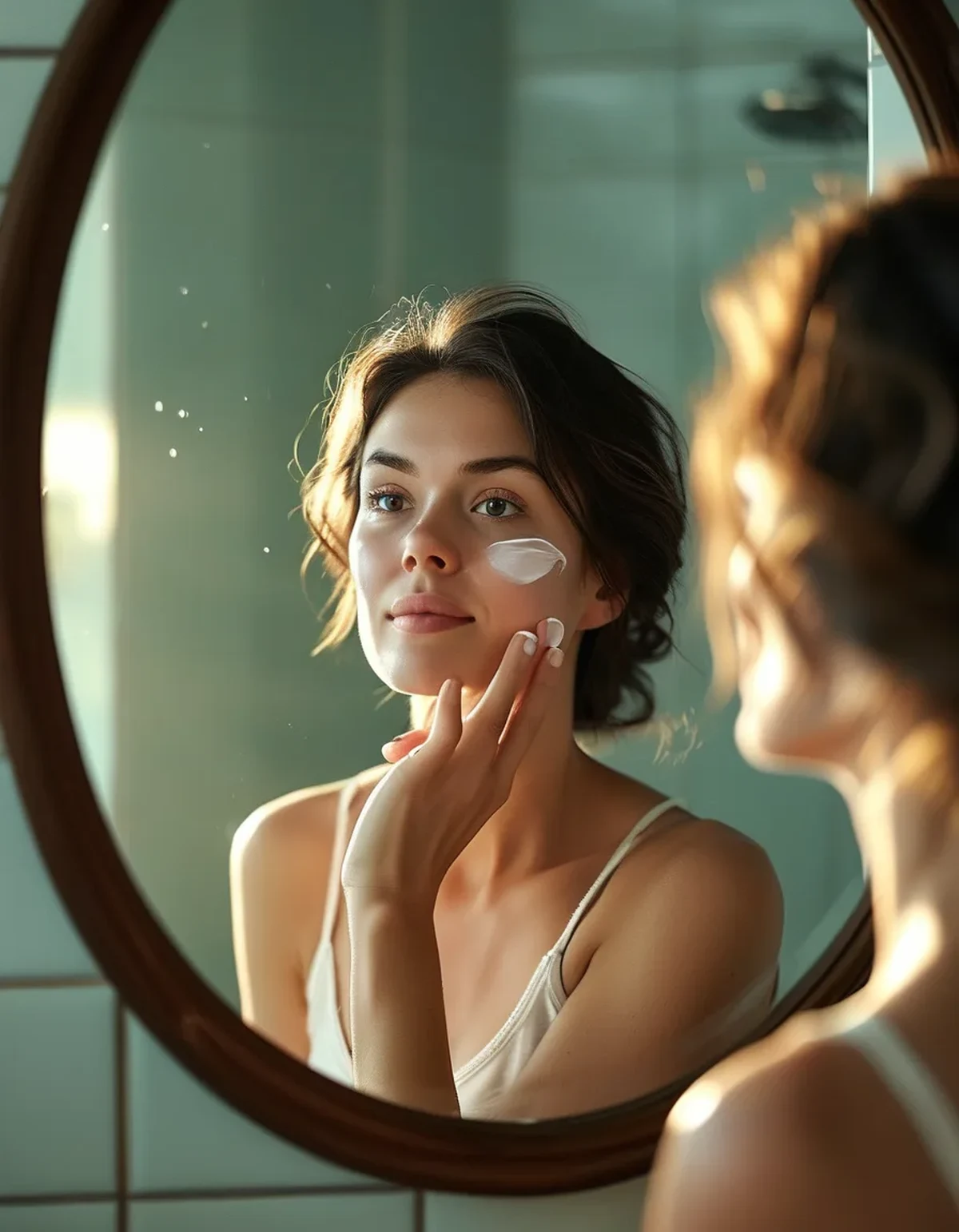
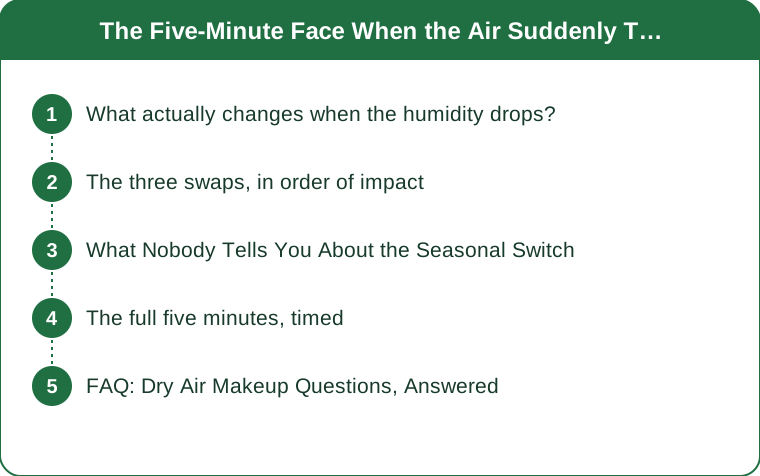
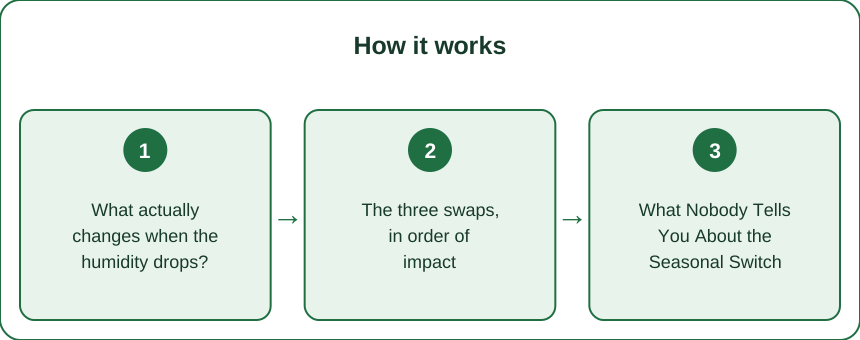
What actually changes when the humidity drops?
The skin loses water faster, and products behave differently on it.
Transepidermal water loss increases in dry air. Water moves from your skin into the surrounding air continuously, and the rate depends on the humidity gradient. When outdoor humidity falls in autumn - and especially once indoor heating starts - that gradient steepens and the skin loses more water than it did in August.
The skin’s surface changes texture within days. Slightly dehydrated skin has more surface irregularity, more visible fine lines, and small areas of flaking that may be invisible bare and very visible under any product.
Products designed for humid conditions now over-perform. Mattifying primers, oil-control foundations, and setting powders all work by absorbing oil and reducing shine. In dry air there is less oil to absorb, so they absorb from where they should not, and the result is that clinging, dry, patchy look.
Powder is the specific culprit. Powder products sit on the surface and require some skin moisture and oil to blend and look natural. On drier skin they emphasise texture rather than smoothing it - which is why the exact same blusher that looked good in July looks chalky in October.
And indoor heating is a bigger factor than the outdoor weather. Once heating comes on, indoor relative humidity can drop dramatically - often to well under 30 per cent, which is genuinely arid. Most of your day is indoors, so this matters more than the forecast.
The three swaps, in order of impact
Swap 1: powder to cream, on cheeks and eyes. The single biggest visual difference and it costs nothing in time. Cream blusher, cream bronzer, cream or stick highlighter, and cream eyeshadow. They blend into the skin rather than sitting on it, they move with the face, and they do not catch on dry texture.
Application is genuinely faster too - fingers work better than brushes for cream products, which removes a step and a tool.
Swap 2: a hydrating base instead of a mattifying one. If your tinted moisturiser, foundation, or primer says oil-control, long-wear matte, or shine-free, it is now working against you. Switch to something labelled hydrating, dewy, luminous, or skin-tint. This is the swap people resist because they are attached to a product that genuinely worked for four months, and it is the one that fixes the most.
Swap 3: one hydrating step underneath. A hydrating serum or essence applied to slightly damp skin, then moisturiser on top while still damp. Applying to damp skin is not a marketing detail - humectants pull water from whatever is available, and if the air is dry they will pull it from your skin unless there is water on the surface to work with.
Total time added: about 40 seconds. The serum step is the only addition and everything else is a substitution.
And one subtraction: the setting powder, or at least most of it. If you need it, a small amount pressed only where you actually get shine - usually the centre of the forehead and the sides of the nose - is enough. All-over setting powder is a summer technique.
What Nobody Tells You About the Seasonal Switch
Product does not fix dehydrated skin, and no amount of technique will. If the skin underneath is flaking, nothing sits well on it. Two or three days of focused hydration - a richer night moisturiser, less hot water on the face, and something occlusive on top at night - does more for how makeup looks than any product change. Fix the canvas first; it takes 72 hours and it is not optional.
Exfoliation is a trap in both directions. Flaking makes people reach for a scrub or an acid, and over-exfoliating dry skin makes the barrier worse and the flaking worse. Once a week, gentle, and stop if the skin feels tight afterwards.
Warm the product in your hands. Cream products applied cold from a cold bathroom in October drag and blend poorly. Ten seconds between the fingers changes the texture completely and it is the most useful trick in this entire article.
Hot showers are doing more damage than the weather. Hot water strips lipids from the skin barrier directly, and the season when hot showers get longer is exactly the season when the barrier is under most pressure. Not a fun piece of advice, but genuinely one of the highest-impact ones.
Your foundation shade may need to change too, and not for the obvious reason. Skin lightens through autumn as sun exposure drops, but it also often becomes slightly more pink or sallow as circulation and barrier function shift. A shade that matched in August can be both too dark and the wrong undertone by mid-October.
And lips need addressing first, not last. Lips have no oil glands and dehydrate faster than any other part of the face. A balm applied at the very start of the routine has four minutes to work before anything goes on top, which is the difference between lipstick sitting well and lipstick catching on flakes.
The full five minutes, timed
0:00 - Balm on lips. First thing, so it works while you do everything else. This ordering detail is worth more than it sounds.
0:10 - Cleanse or rinse, lukewarm, and leave the skin damp. Do not dry the face fully. Damp skin is the working surface for everything that follows.
0:40 - Hydrating serum onto damp skin. A few drops, pressed rather than rubbed. Do not wait for it to dry.
1:00 - Moisturiser on top while still damp. This traps the water in the serum against the skin, which is the entire mechanism. Warm it in your hands first.
1:40 - Tinted moisturiser or skin tint, applied with fingers. Warmth from your hands helps it melt in. Concentrate coverage in the centre of the face and blend outward rather than covering everything evenly.
2:30 - Cream blusher on the cheeks, blended with fingers. Higher on the cheek than you would place a powder, and blended up toward the temple.
3:00 - Cream or stick highlighter, if you use one. Top of the cheekbone, inner corner of the eye, and the centre of the lower lip if you want a fuller look.
3:20 - Brows, and cream eyeshadow if using. A single wash of a cream shade across the lid with a finger takes fifteen seconds and looks intentional.
4:00 - Mascara.
4:30 - Lip colour over the balm that has now had four and a half minutes to work.
4:50 - Powder only where you shine, if at all. A small amount, pressed rather than swept.
And a mid-day tool worth having: a hydrating mist in a bag. A light spritz over cream products at 3pm revives them rather than disturbing them, which is not true of powder-based faces. This is one of the practical advantages of the cream-based approach that nobody mentions.
FAQ: Dry Air Makeup Questions, Answered
Why does my makeup look patchy in autumn?
Because lower humidity increases water loss from the skin, creating surface texture and small flaky areas that powder products cling to. Mattifying bases that worked in summer humidity now absorb from skin that has no excess oil to give, which produces exactly that clinging, patchy look.
Should I switch from powder to cream products for autumn?
Yes - it is the highest-impact change available. Cream blusher, bronzer, and eyeshadow blend into the skin rather than sitting on the surface, so they do not catch on dry texture. They also apply faster with fingers, so the routine gets shorter rather than longer.
Does applying serum to damp skin actually matter?
Yes. Humectant ingredients pull water from whatever is available, and in dry air they will draw it from deeper in your skin unless there is water on the surface to work with. Applying to damp skin and sealing with moisturiser while still damp is the whole mechanism.
How do I fix flaky skin before makeup?
Focus on hydration for two or three days rather than reaching for exfoliation - a richer night moisturiser, cooler and shorter showers, and something occlusive at night. Over-exfoliating dry skin damages the barrier and makes flaking worse. Gentle exfoliation once a week at most.
TL;DR:
- Lower humidity means faster water loss, more surface texture, and powder that clings.
- Swap powder to cream on cheeks and eyes - biggest change, and it is faster to apply.
- Swap mattifying base for hydrating, even though the mattifying one worked all summer.
- Add serum to damp skin and seal with moisturiser while still damp. 40 extra seconds.
- Balm on lips first, warm creams in your hands, and blame the hot showers.
The products did not go off. The air took its side of the deal away, and three textures put it back.
Keep Reading
This article is for general informational and styling purposes only. Fit, sizing, and product availability may vary.